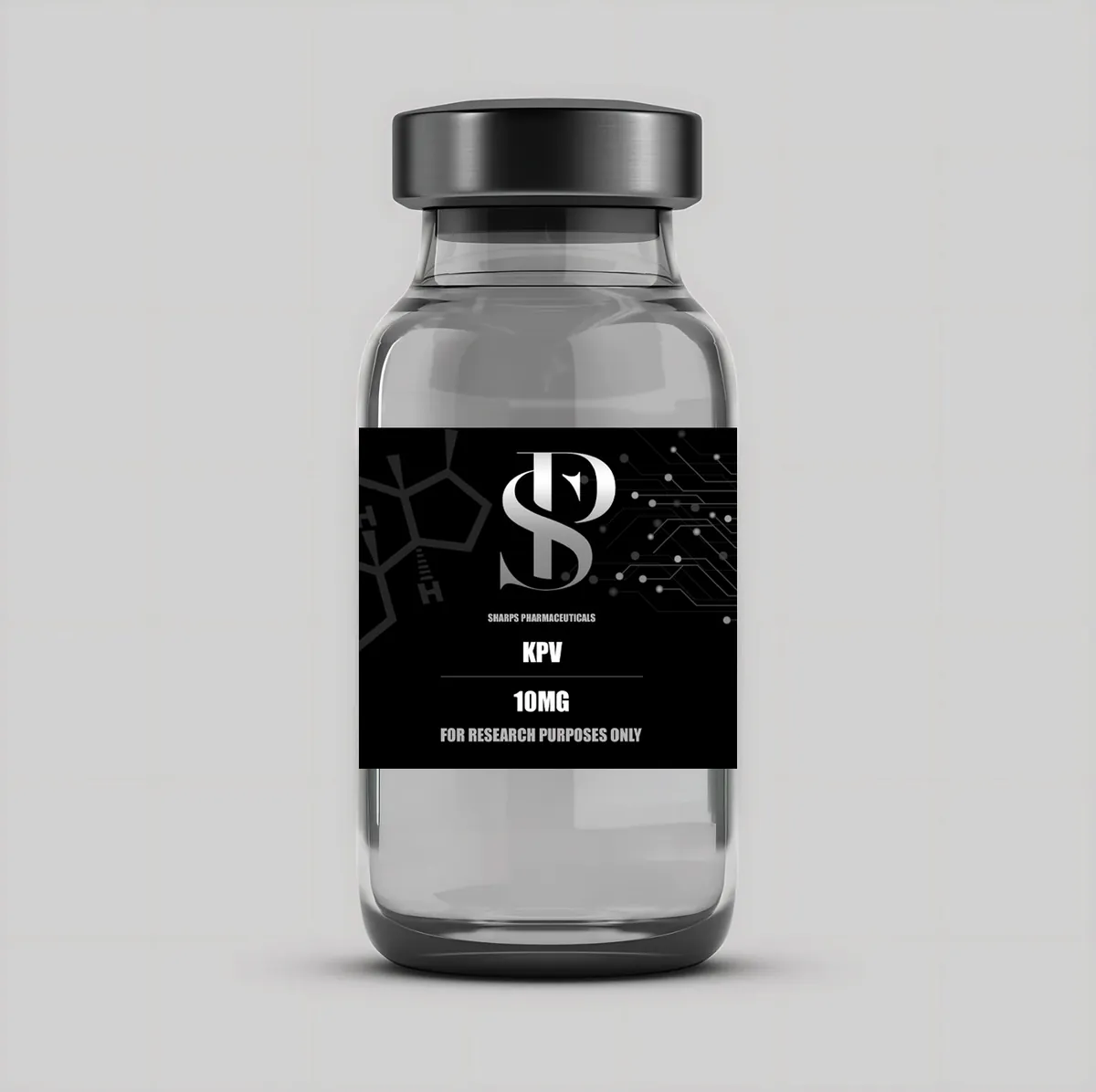
KPV Research Overview: The α-MSH C-Terminal Tripeptide
Written from the cited peer-reviewed literature; every product lot is third-party tested.
For research purposes only. This content is intended for educational and informational purposes. Products mentioned are sold strictly for laboratory research use. Not for human consumption. Not for human use. Read more
KPV is a tripeptide with the sequence Lys-Pro-Val. It corresponds to the last three amino acids (residues 11–13) of alpha-melanocyte-stimulating hormone (α-MSH), a 13-amino-acid peptide hormone.
KPV interests researchers because it is far shorter than α-MSH yet is studied in some of the same signaling pathways. This overview covers its origin, how it enters cells, and the main lines of laboratory research.
Origin in α-MSH
α-MSH is produced from a larger precursor protein, pro-opiomelanocortin (POMC), which is also the source of ACTH and several other peptides. α-MSH acts on the melanocortin receptors and has been studied for decades in research on pigmentation, energy balance and immune signaling.
Researchers investigating which parts of α-MSH were responsible for its activity in immune and inflammatory signaling models found that the C-terminal tripeptide, KPV, retained some of that activity in cell models. That finding made KPV a research tool in its own right.
How KPV enters cells
A frequently cited study by Dalmasso and colleagues (Gastroenterology, 2008) examined how KPV is taken up by intestinal epithelial cells through PepT1, a transporter that normally carries small peptides from digested protein. The study used both cultured cells and mouse models of intestinal inflammation.
This transport route matters for interpreting results. It suggests that some of KPV's activity in cell models may involve signaling inside the cell, not only binding to melanocortin receptors on the cell surface as α-MSH does.
Main lines of research
- NF-κB signaling: KPV has been examined for its effects on the NF-κB pathway, a central regulator of inflammatory gene expression, in cell-culture models.
- Cytokine production: studies have measured changes in inflammatory cytokine levels in cell and animal models.
- Intestinal epithelial models: building on the PepT1 work, researchers have used intestinal cell lines and rodent models.
- Melanocortin research: KPV is also studied alongside α-MSH analogs to separate receptor-dependent and receptor-independent effects.
Most published KPV research is preclinical, and results in one model do not establish activity in another.
Handling in the laboratory
KPV is supplied as a lyophilized powder and is generally reconstituted with bacteriostatic water before use. Sealed vials are stored at -20°C, protected from light and moisture.
Testing and documentation
Every lot we sell is tested by Freedom Diagnostics, an independent laboratory, using HPLC for purity and mass spectrometry for identity. Certificates for tested lots are published in our COA library, and each can be verified directly with the lab using the search code printed on it. Our guide explains how to verify a COA.
References
- Dalmasso G, Charrier-Hisamuddin L, Nguyen HT, Yan Y, Sitaraman S, Merlin D. PepT1-mediated tripeptide KPV uptake reduces intestinal inflammation. Gastroenterology. 2008. pubmed.ncbi.nlm.nih.gov/18061177/
Every lot is third-party tested. View our certificates of analysis →
Related reading
For research purposes only. All products from Canada Research Labs are supplied strictly as reference materials for in-vitro laboratory research by qualified professionals. They are not drugs, natural health products or cosmetics, and have not been authorized by Health Canada for any human or veterinary use.