Research Articles and Guides
Literature overviews of the compounds we supply, written for researchers. Every article describes preclinical research only and is for informational purposes.
Welcome to the Canada Research Labs research blog, a hub for laboratory professionals, independent researchers, and students working with research peptides in Canada. Our articles cover peptide chemistry, storage and handling best practices, and comparisons between commonly studied compounds such as BPC-157, TB-500, CPB-1S, CPB-2T, and CPB-3R peptides.
All content here is published strictly for in-vitro research and educational use. None of our articles describe or endorse human or animal consumption. For questions about a specific compound, see our FAQ or review our Material Transfer Agreement.
GHRH Analogs Compared: Sermorelin, CJC-1295 and Tesamorelin
Sermorelin, CJC-1295 (with and without DAC) and Tesamorelin compared: sequence length, stabilizing modifications, enzymatic stability and how researchers choose between them.
GLOW vs KLOW: Two Research Peptide Blends Compared
GLOW and KLOW blends compared: what is in each vial, how much of each component, the one peptide that separates them, and what researchers should know about blends.
Selank vs Semax: Two Russian Heptapeptides Compared
Selank and Semax compared: their parent peptides, sequences, the shared Pro-Gly-Pro design, the laboratory models each is studied in, and the limits of their literature.
BPC-157 vs TB-500: How the Two Research Peptides Differ
BPC-157 and TB-500 compared: structure, size, origin, research focus and literature, plus why they are often studied and sold together.
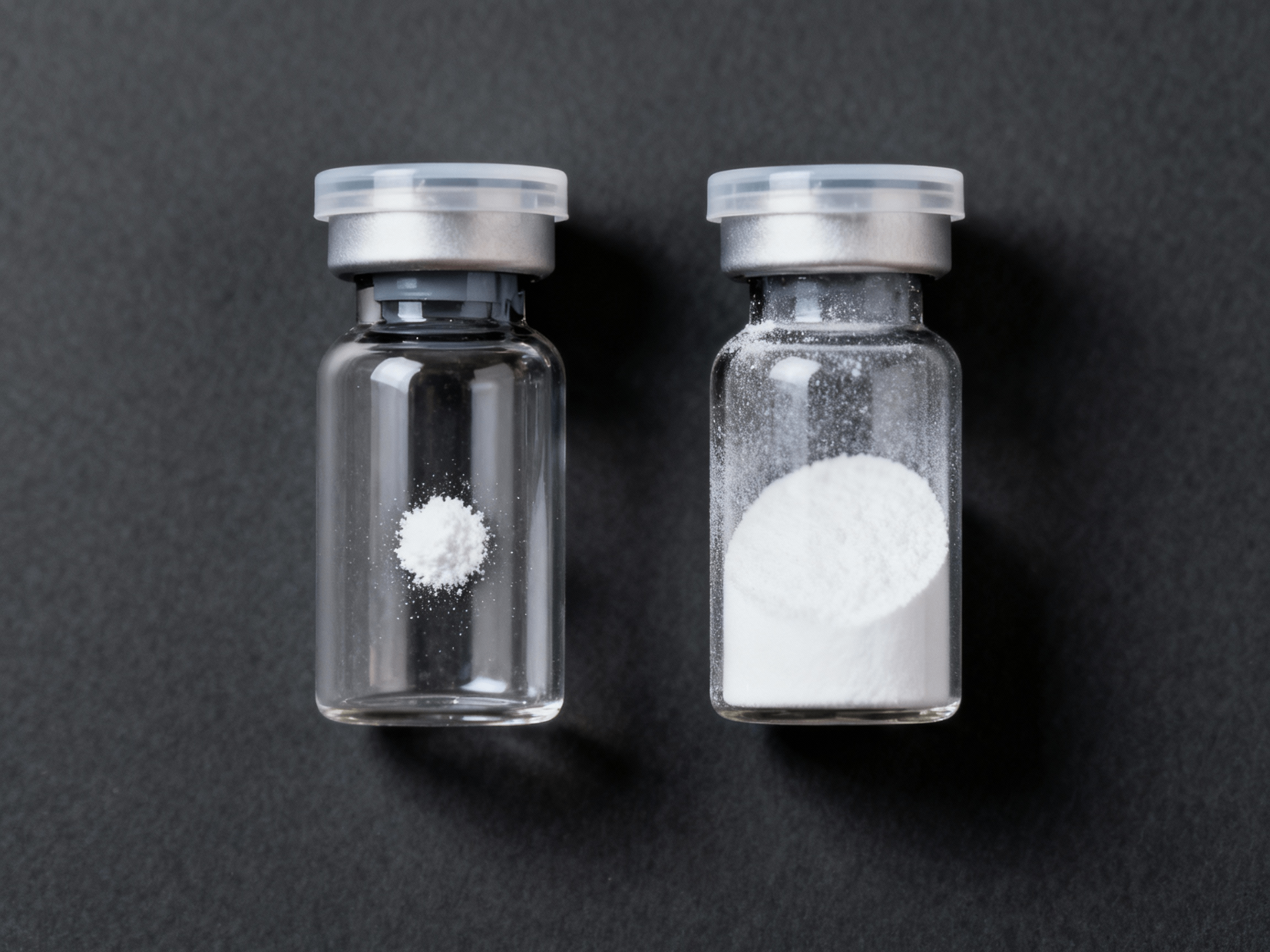
Mannitol vs Mannitol-Free Peptides
Understanding the difference between mannitol and mannitol-free peptides. Learn about the role of mannitol in peptide stability and which option is right for your research needs.